Animal Use Syringes may look simple, but choosing the right model affects dosing accuracy, handling, and cleaning routines. A farm worker may need a durable syringe for repeated livestock treatments. A veterinary clinic may prioritize clear graduations and controlled delivery for smaller animals. Small details count.
Industry data helps explain the wider context, though it does not measure syringe sales directly. The FAO’s November 2023 Food Outlook projected global meat production at 364 million tonnes that year. The World Health Organization reports about 59,000 rabies deaths annually, with dogs responsible for most human cases. These figures underline the scale of animal health needs, but they should not be mistaken for direct evidence of product demand. A careful buyer still needs to match equipment to the animal, prescribed volume, fluid type, and intended frequency of use.
This Top 10 guide compares syringe options through practical purchasing criteria: capacity, readable markings, material, connector design, ease of cleaning, and availability of replacement parts. It is not a substitute for veterinary advice or product instructions. A low price can be tempting; however, poor fit or unclear graduations may create avoidable handling problems. That distinction matters. Readers should confirm specifications with manufacturers and follow professional guidance before selecting equipment.
Understanding Animal-Use Syringes and Their Main Applications
Animal-use syringes deliver measured doses, but the right design depends on the animal, medicine, and route. A small oral dosing syringe can help administer liquid medicine to a cat without a needle. For injections, veterinarians select syringe capacity and needle size according to the prescribed dose and the animal’s body size. Fit matters. A barrel that is too large can make small doses harder to measure accurately.
In clinics, single-use sterile syringes are common for injections and drawing up medication. Livestock operations may use multi-dose equipment when a veterinarian directs repeated vaccination or treatment. These tools can speed up handling, but each dose still needs careful measurement. Check the graduation marks in good light, and avoid estimating between lines. Small details count. Oral syringes should be clearly kept apart from injection equipment to prevent mix-ups.
Syringes are not interchangeable for every task. A needle-free dosing syringe is suitable for some oral liquids, while injectable medicines require equipment and technique specified by a veterinary professional. Needle length, injection site, and medicine instructions matter; the same setup may not suit every species. Keep sterile parts sealed until use, and follow product directions for cleaning or disposal. In real settings, routines can become rushed, and that is exactly when dose checks deserve another moment.
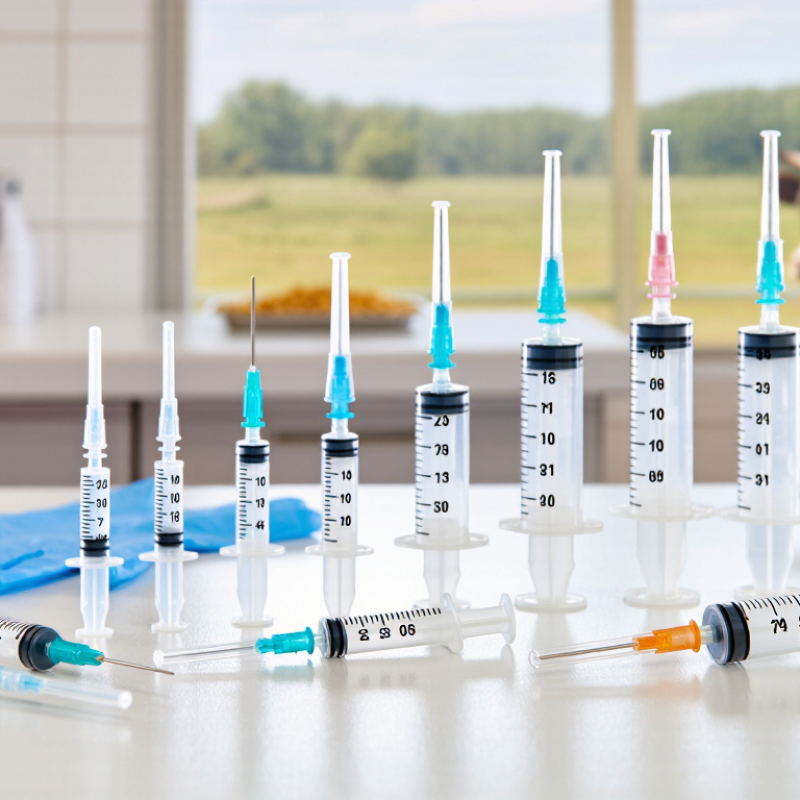
A comparison of commonly available syringe capacities used in veterinary settings. Capacity indicates the syringe’s nominal volume, not a recommended dose.
Smaller syringes can support more precise measurement of low volumes, while larger formats may be used for higher-volume tasks such as oral administration or irrigation. Select the syringe and graduations appropriate to the animal, product, and procedure; available formats vary by market.
Veterinary care and livestock work call for different syringe designs. A standard hypodermic syringe suits measured doses during examinations or treatment. Luer-lock connections help keep needles secure during handling, while slip-tip models allow quick changes. Tuberculin syringes offer fine measurement for small doses. Fit matters. Capacity, graduations, and needle compatibility should match the animal, medicine, and veterinary instructions—not just the purchase price.
For herd work, reusable multi-dose and automatic syringes can speed repeated, consistent dosing. They need careful cleaning, calibration, and routine inspection; worn seals can undermine accuracy. Single-use syringes reduce cleaning steps and help prevent cross-contamination when used correctly. FAO’s World Food and Agriculture Statistical Yearbook 2023 reports a global cattle population exceeding 1.5 billion head, illustrating the scale of animal farming and its demand for practical equipment. Scale is not a reason to rush. Small errors add up. In the field, a clear dose window and a comfortable grip matter more than a long feature list. I have to admit that product comparisons can overlook the simplest issue: whether the device stays accurate after repeated use. Proper selection and handling remain essential.
When comparing animal-use syringes, start with the dose range and graduation marks. A small-volume syringe needs clear, fine increments; larger doses may call for a wider barrel. Check whether markings remain readable under barn or clinic lighting. Small details matter.
Match the design to the animal and the procedure. A smooth plunger should move evenly without sticking, while a secure connection helps prevent leakage during use. Consider barrel material, seal quality, and whether the syringe can be cleaned or is intended for single use. Also assess needle compatibility and dead space, since trapped fluid can affect dose accuracy. No single model fits every task.
Handling matters. A textured grip can help when gloves are wet, and a stable finger flange may reduce hand strain during repeated dosing. Look for packaging that keeps components clean and instructions that explain assembly and care. Compare capacity, accuracy, durability, and ease of inspection rather than choosing by price alone. Buyers can sometimes overvalue ruggedness and overlook readability. That trade-off deserves a second look. For dosing decisions, follow veterinary guidance and the product’s stated instructions.
Animal-use syringes differ by dose, viscosity, and handling conditions. FAO’s 2023 assessment estimates terrestrial animal-source foods provide 18% of global dietary calories and 34% of protein. That scale makes accurate, repeatable delivery important across livestock and companion-animal care. Small details matter.
Fixed-dose syringes suit consistent, small volumes; adjustable-dose and automatic multi-dose designs can reduce repeated handling in larger herds. Low-volume calibrated syringes help with poultry and small animals, while oral-drench syringes deliver liquids without a needle. Catheter-tip and larger-capacity models address other administration needs. Match the barrel markings and materials to the product and animal. There is no perfect all-species setup.
WOAH’s Terrestrial Animal Health Code, Chapter 4.18, discusses vaccination programs adapted to animal health conditions and competent delivery. In practice, inspect seals, graduations, and moving parts before use, then follow veterinary direction and the equipment instructions for cleaning and maintenance. A syringe that feels smooth can still misdose if its plunger sticks. That is easy to overlook. A shortlist of ten designs is useful, but species, dose range, and operator technique should decide the final choice.
Global buyers should compare animal-use syringes by dose accuracy, material, needle fit, packaging, and traceability—not price alone. ISO 7886-1 sets requirements for sterile, single-use hypodermic syringes; buyers should confirm whether its scope matches the product and intended use. Ask suppliers for test reports, lot identification, shelf-life details, and evidence of quality controls. A certificate alone cannot prove consistent performance in the field. Fit matters.
WHO reports that about 60% of known human infectious diseases are zoonotic, while roughly 75% of emerging infectious diseases originate in animals. These figures, published in WHO’s zoonoses overview, underline why clean handling matters in animal-care settings. Check that each pack stays sealed and dry during transport, and confirm storage instructions before ordering across climates. During use, match the syringe scale to the prescribed dose, avoid reusing disposable syringes, and place used needles in approved sharps containers. Small details are easy to miss. They matter. Compare supplier documentation with local veterinary requirements, and review complaints or shipment records where available. A low-cost product may still create costly dosing errors if markings are hard to read.
Consider the animal’s size, prescribed dose, medicine, and administration route. One design rarely suits every species.
No. Needle-free oral syringes and injection equipment serve different purposes. Keep them clearly separated.
Choose a barrel with suitable graduations. Check the markings in good light, rather than estimating between lines.
They can reduce repeated handling during veterinarian-directed treatments in larger herds. Each dose still needs careful measurement.
Check the packaging seal, scale markings, and moving parts. A smooth plunger can still misdose.
Keep sterile parts sealed until use. Do not reuse disposable syringes, and follow the product’s disposal directions.
Review dose accuracy, materials, needle fit, packaging, lot identification, and shelf-life information. Price alone tells little.
Rushed work can lead to missed dose checks or equipment mix-ups. That is easy to overlook.
Animal Use Syringes are essential tools in veterinary care and animal farming, supporting the accurate delivery of medicines, vaccines, and other prescribed treatments. Different designs suit different species and tasks, from small-volume syringes for companion animals to durable, higher-capacity options for livestock. Choosing the right type depends on the animal’s size, the intended application, required volume, ease of handling, and whether the equipment is designed for single or repeated use.
This overview compares ten common syringe options for varied needs and explains the features buyers should assess, including measurement clarity, material quality, needle compatibility, comfort, and cleaning requirements. It also highlights practical global purchasing considerations such as product standards, supplier reliability, clear instructions, and appropriate storage. Used responsibly and in accordance with veterinary guidance, a well-matched syringe can support safer, more consistent animal care.

Weinuoer