A Reusable Needle is a needle specifically designed for repeated use under defined conditions. It is not simply a disposable needle used more than once. That distinction matters. In many healthcare settings, injection needles are labeled for single use and must not be reused. Some specialized instruments, however, may be designed for repeated use when trained professionals clean, inspect, and sterilize them according to the manufacturer’s instructions.
The term can describe different tools, depending on the field. A reusable needle may be used in certain clinical, laboratory, veterinary, or craft applications. Its purpose depends on its shape, material, and design. For example, a clinician may select a particular needle to deliver a treatment, while a craft worker may use one for a specific material. The label alone does not explain how the tool should be handled. Users need to check its intended purpose and care instructions.
Safe reuse depends on more than appearance. A needle can look clean and still require validated processing before another use. Improper cleaning may leave contamination behind, while repeated use can damage the tip or affect performance. Not every needle qualifies. This article explains what reusable needles are, where they may be used, and what to consider when identifying one. The details can vary by product, and that is worth remembering: when instructions are unclear, a qualified professional or the manufacturer is the reliable source.
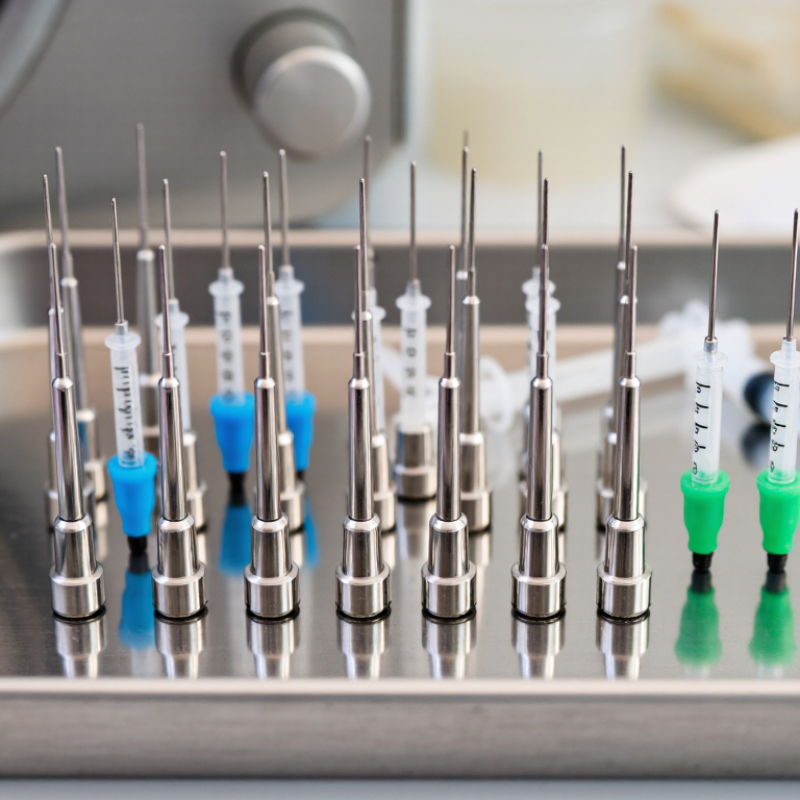
A reusable needle is designed for repeated use only after a validated cleaning and sterilization process. Its basic parts are a narrow metal shaft, a pointed bevel, and a hub that connects to a compatible handle or device. Hollow needles carry fluid through a lumen; solid needles do not. Stainless steel is common because it resists corrosion and can tolerate appropriate sterilization. Small details matter. A bent tip, blocked lumen, or damaged hub can affect performance, so inspection is essential.
Reusable designs appear in selected clinical and technical settings where the device instructions support reprocessing. Many routine injection needles, however, are labeled for single use and should not be reused. The World Health Organization’s 2015 injection-safety guidance reported modelled estimates for 2010: unsafe injections were linked to 1.7 million hepatitis B infections, 315,000 hepatitis C infections, and 33,800 HIV infections. These figures show why reuse cannot mean simply wiping a needle clean. The exact reprocessing requirements vary by device, and a needle that looks intact may still be unsafe. Check its intended use and manufacturer instructions.
A reusable needle is a device designed and labeled for repeated use after validated cleaning and sterilization. It is not simply a disposable needle that has been washed. Common examples include stainless-steel hypodermic needles used in some veterinary settings, where sturdy construction supports repeated procedures. Their narrow hollow shafts deliver medication beneath the skin. Some biopsy systems also have reusable handles or guides, though the sharp needle or sampling component may be single-use. The distinction matters.
Each type serves a specific task. Hypodermic needles deliver measured fluids; specialized biopsy needles collect small tissue cores for examination. Reusable surgical needle holders, sometimes mistaken for reusable needles, grip suturing needles during wound closure. Their precision helps clinicians place stitches in confined areas. The category is less tidy than it sounds. Device labeling determines which parts can be reprocessed.
Reuse demands strict infection-control procedures. The World Health Organization reported about 16 billion injections worldwide each year in its 2016 guidance on safety-engineered syringes. That scale makes safe handling essential. The U.S. Centers for Disease Control and Prevention advises cleaning and sterilizing reusable medical instruments according to validated procedures and manufacturer instructions. A missed step can leave contamination behind, even when metal looks spotless. For that reason, many modern needles are single-use, while reusable designs belong only in workflows equipped for proper reprocessing.
Representative needle lengths illustrate how practitioners select needles for different treatment areas. Actual sizes and uses vary by practitioner and technique.
Needle length alone does not determine suitability. Reusable needles should be reused only when specifically labeled for reuse and reprocessed according to applicable infection-control guidance; sterile single-use needles are common practice.
A reusable needle is a device specifically designed for repeated use after validated reprocessing. It is not an ordinary disposable needle saved for later. In practice, staff first check the manufacturer’s instructions and confirm the device is intact. They then clean it, inspect it, package it, and sterilize it using an approved process. The Centers for Disease Control and Prevention classifies devices entering sterile tissue as critical items, which require sterilization before each use. That distinction matters.
The World Health Organization’s 2010 injection-safety toolkit estimated that about 16 billion injections are given worldwide each year. The figure helps explain why safe handling and clear records matter, but it does not mean needles should be reused. In a facility that uses a reusable model, staff document each reprocessing cycle and keep clean equipment separate from used devices. A bent tip, residue, or damaged packaging means the needle should not be used. The handoff between cleaning and sterilization can be a weak point. Small details matter. Reprocessing takes time, and mistakes are possible; when a needle is intended for single use, it must not enter this workflow.
A reusable needle is a device specifically designed and validated for repeated use. Many hypodermic needles are single-use and must not be reprocessed. That distinction matters. After use, treat the needle as contaminated and place it in an approved sharps container. Never recap or hand-clean an exposed sharp.
For devices designed for reprocessing, follow the manufacturer’s validated instructions, not a household method. The World Health Organization’s 2016 guidance on medical-device reprocessing emphasizes cleaning before disinfection or sterilization, since remaining soil can interfere with effective processing.
Cleaning should remove visible residue from every surface, including joints or hubs, using the specified tools and process. Then rinse, dry, inspect, package, and sterilize as directed. A clean appearance is not proof of sterility.
The CDC’s 2008 Guideline for Disinfection and Sterilization recommends biological-indicator testing at least weekly, and for every load containing implants. Keep processing records and separate clean devices from used ones.
A practical blind spot is rushing inspection when a device looks spotless. Pause if damage, residue, or uncertainty remains; do not return that needle to service.
A reusable needle is designed to be cleaned and sterilized between uses, but that does not mean any needle can safely be reused. Some specialized instruments use reusable needle components under validated clinical procedures. Many injection needles, however, are labeled for single use. Check the instructions, not appearance alone. A bright, straight needle can still be unsafe.
Reuse may reduce recurring supply costs and discarded material when trained staff, suitable equipment, and documented procedures are available. It also adds work: cleaning, sterilization, storage, and inspection must be controlled. A bent tip, dull edge, residue, or damaged connection can cause injury or compromise a procedure. Small flaws count. Reprocessing takes time and can fail, so savings are not automatic.
Choose a disposable needle when its instructions specify single use, sterility is uncertain, or reliable reprocessing is unavailable. Products labeled sterile are supplied ready for use, but they create waste and require safe sharps disposal. For clinical care, follow the manufacturer’s directions and advice from a qualified healthcare professional. Convenience is not a safe reason to reuse a single-use needle.
| Topic | Reusable needle | Disposable needle | Practical takeaway |
|---|---|---|---|
| Definition | A needle specifically designed and labeled for repeated use after the manufacturer’s required cleaning, inspection, and sterilization process. | A needle supplied for one use and then discarded. Many modern injection needles are labeled for single use. | Check the device labeling and instructions; appearance alone does not show whether a needle can be safely reused. |
| Typical applications | Limited, device-specific applications in which the needle and its associated instrument are expressly designed for validated reprocessing. | Commonly used for injections and other procedures where a sterile, single-use needle is specified. | Do not assume that an injection needle is reusable. Use it only as directed for its intended purpose. |
| Infection prevention | Safe reuse depends on following a validated reprocessing procedure every time. Inadequate processing can leave contamination behind. | A new sterile needle avoids reprocessing between uses, but it must still be handled aseptically and used only once. | Never share a needle. Never reuse a single-use needle, including on the same person. |
| Cleaning and sterilization | Requires the full process specified for that device, which may include cleaning, inspection, packaging, and a validated sterilization cycle. | Not intended to be cleaned or sterilized for another use; discard after the procedure. | Wiping or rinsing is not sterilization. Do not attempt to reprocess a needle at home. |
| Potential benefits | May reduce the number of items discarded in settings equipped and authorized to reprocess that specific device correctly. | Provides a ready-to-use sterile item and avoids the reprocessing steps required for reusable devices. | Any waste or cost advantage depends on the device, reprocessing equipment, staff training, and local requirements. |
| Limitations | Requires appropriate equipment, trained staff, reliable quality controls, and compliance with the manufacturer’s instructions and applicable rules. | Creates sharps waste and requires a continuing supply of sterile needles. | Convenience or reduced waste must never take priority over sterility, device instructions, or patient safety. |
| Needle condition | Must be inspected as directed. Damage, corrosion, dullness, or other defects can make it unsuitable for use. | Use only if the package is intact, the needle is within its stated shelf life, and it appears undamaged. | Do not use a damaged needle or one from a compromised package. |
| Disposal | Follow the facility’s procedure for handling and reprocessing; discard the device if it is damaged or no longer approved for use. | Place immediately after use in an approved sharps container; follow local rules for container disposal. | Do not place loose needles in household recycling or leave them where others could be injured. |
| When to choose | Only when the specific needle is explicitly designed for reuse and a qualified setting can complete its validated reprocessing procedure. | When the needle is labeled single-use, when reprocessing is unavailable or not authorized, or when the procedure calls for a sterile new needle. | If uncertain, choose a sterile single-use needle as directed and consult a qualified healthcare professional or the device instructions. |
Safety note: Reusable does not mean safe to reuse without proper reprocessing. Follow the product instructions and applicable clinical or public-health requirements; never share needles.
It is designed and validated for repeated use after proper reprocessing. An ordinary single-use needle does not qualify.
No. Follow the device instructions. If it is labeled for single use, do not reprocess it.
Treat it as contaminated and follow the facility’s handling process. Never recap or hand-clean an exposed sharp.
Staff follow validated instructions to clean, rinse, dry, inspect, package, and sterilize the device. Details matter.
Check for residue, a bent tip, damaged connections, and compromised packaging. A spotless surface can still fool us.
It may reduce recurring supply costs and discarded material. But equipment, staff time, and careful records are needed. Savings are not automatic.
Choose one when instructions specify single use, reprocessing is unavailable, or sterility is uncertain. Convenience is not enough.
Records track reprocessing cycles, while separation helps prevent mix-ups. Rushed handoffs can be a weak point. Small flaws count.
A Reusable Needle is a needle designed to be cleaned, inspected, and sterilized for use more than once with compatible equipment. Its basic design typically includes a pointed metal shaft and a hub or handle that allows it to connect securely to an instrument. Different forms serve specialized purposes: some are made for surgical procedures, others for particular injection or sampling tasks, and some are used with precision instruments in clinical or laboratory settings. The appropriate type depends on the procedure, the material being handled, and the equipment involved.
In practice, trained professionals select a suitable needle, check it for damage, and use it according to established procedures. Afterward, it must be cleaned thoroughly and sterilized using a method approved for that specific needle; safe handling and storage help prevent injury and contamination. Reusable designs can reduce repeated replacement and may be useful where validated reprocessing is available. However, they require careful maintenance and can become damaged over time. Disposable needles are often preferable when reliable reprocessing is not possible or when the needle is intended for single use.

Weinuoer