Choosing the right aluminum needle supplier affects product safety, consistency, and long-term production costs. A reliable supplier should provide stable dimensions, clean surfaces, and dependable delivery. Small defects can cause serious quality concerns during assembly or use. A single burr may damage packaging or disrupt automated equipment.
The evaluation should begin with material details. Ask whether the supplier can confirm aluminum grade, hardness, wall thickness, and manufacturing tolerances. Request recent inspection reports, test samples, and clear batch records. Certifications can support credibility, but they should not replace practical verification. Examine the sample closely. Check the tip, opening, finish, and overall straightness under suitable lighting. A supplier’s response to technical questions also reveals its experience.
Do not choose by price alone. Compare tooling capability, minimum order quantities, lead times, packaging methods, and after-sales support. Strong suppliers explain limitations instead of promising everything immediately. That matters. They should also describe corrective actions when a batch fails inspection. Independent audits or factory visits can provide useful evidence, although they are not perfect. Our checklist may overlook a detail specific to your application. That is why field testing remains essential.
The best Aluminum Needle supplier is not always the largest company. It is the partner that communicates clearly, documents its processes, and delivers repeatable results. Review performance over time, not after one successful shipment. A careful decision today can reduce waste, delays, and quality complaints later. Yet expectations must remain realistic. Even experienced suppliers need clear specifications, timely feedback, and sensible quality agreements from buyers.
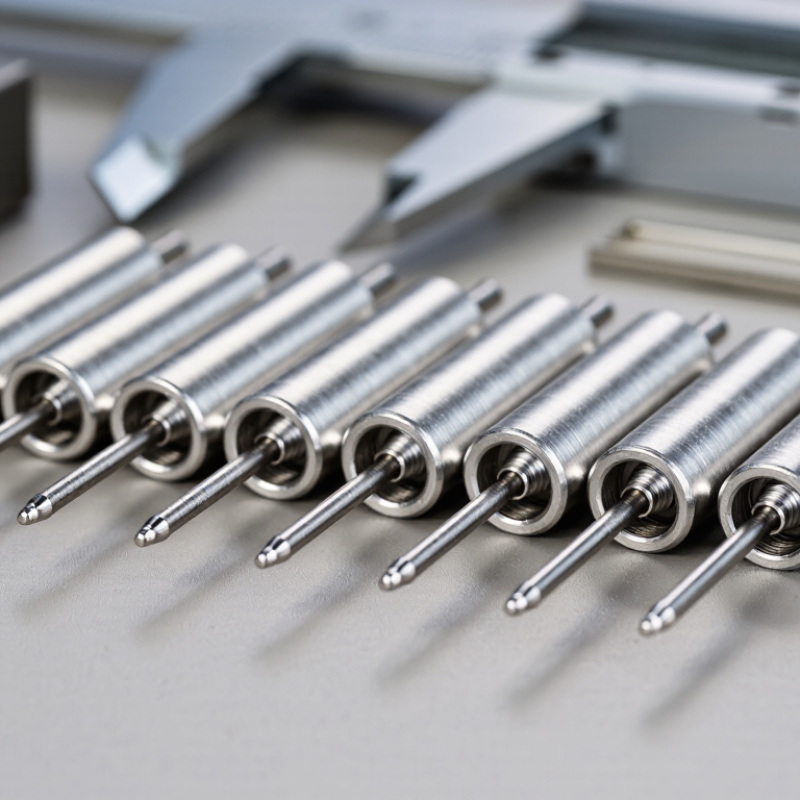
An aluminum needle supplier provides aluminum needles and related precision components for specific manufacturing or technical applications. The supplier may handle material selection, shaping, surface finishing, inspection, and packaging. A reliable supplier should explain the aluminum grade, needle diameter, length tolerance, and surface condition in clear language. Vague specifications create problems later.
Choosing one requires more than comparing prices. Ask how the supplier controls dimensional accuracy during production. For example, a needle measuring 0.05 millimeters above tolerance may fail inside a narrow guide or fitting. Request inspection records, sample pieces, and production photographs when appropriate. A capable supplier should also describe its testing equipment, batch identification process, and response time for quality complaints.
Experience matters, but it should be visible in practical details. The supplier should understand corrosion concerns, bending resistance, edge smoothness, and storage conditions. It should provide technical documents without hiding important limitations. A polished website is not proof of competence. I have learned that small questions often reveal more than impressive claims. Can they explain why one aluminum grade suits your application better than another? Can they repeat the same result in a second batch? If answers remain unclear, pause before placing a large order. Even experienced buyers sometimes overlook packaging, and damaged needle tips may arrive before production begins.
An aluminum needle supplier provides aluminum needles and related manufacturing services for applications such as medical devices, laboratory equipment, dispensing systems, and industrial assemblies. The evaluation framework below uses practical qualification weights: product quality and regulatory compliance should receive the highest priority, followed by traceability, dimensional consistency, delivery performance, and technical support.
The percentages are planning weights for supplier evaluation, not market-share statistics. Buyers should verify certifications, material documentation, inspection records, samples, and production capacity before placing an order.
How to Choose the Best Aluminum Needle Supplier?
Which Aluminum Needle Specifications Match Your Application?
Selecting an aluminum needle starts with the material it must handle, not the supplier’s catalog. Record viscosity, temperature, exposure time, and required flow rate. These details shape the needle’s internal diameter and wall thickness. Thin fluids may suit a smaller bore, while viscous materials need a wider passage. Check whether the aluminum grade resists the process environment. Some applications also require an internal coating or a different hub material.
Needle gauge affects control, pressure, and dispensing speed. Length matters when the needle must reach a vial, cavity, or narrow channel. Tip geometry deserves practical attention. A blunt tip can reduce accidental scratching, while a beveled tip may improve penetration. For controlled dispensing, compare dead volume and outlet consistency. I have found that published dimensions are only a starting point. Small differences in bore tolerance can change droplet size. That lesson is easy to overlook.
Ask the supplier for material certificates, dimensional tolerances, cleanliness data, and sample units. Confirm connection standards before ordering a large quantity. Run samples under actual pressure, temperature, and cycle conditions. Watch for bending, clogging, leakage, and unstable flow. Keep inspection records. A reliable supplier should explain variation clearly, not hide behind general specifications. If the first choice performs poorly, revise one variable at a time. That may feel slower. It usually prevents expensive assumptions.
Application-based comparison of aluminum needle dimensions, construction features, and supplier evaluation criteria
| Application | Typical Gauge | Approx. Outside Diameter | Recommended Length Range | Needle Tip | Wall Construction | Recommended Aluminum Specification | Important Supplier Checks |
|---|---|---|---|---|---|---|---|
| General liquid dispensing | 18G–22G | 1.27–0.72 mm | 25–50 mm | Blunt or flat-cut tip | Regular wall | Lightweight aluminum body with a smooth, burr-free internal passage | Confirm dimensional tolerance, internal cleanliness, connector fit, and consistent flow rate. |
| Adhesive and sealant application | 14G–18G | 1.63–1.27 mm | 25–100 mm | Blunt, tapered, or precision-cut tip | Regular or heavy wall | Rigid aluminum tube suitable for higher-viscosity materials and controlled bead placement | Check pressure resistance, tip geometry, clogging risk, surface finish, and compatibility with the adhesive. |
| Fine fluid dispensing | 23G–27G | 0.64–0.41 mm | 12–50 mm | Blunt precision tip | Thin or regular wall | Small-bore aluminum needle with a precisely formed opening and low dimensional variation | Require inspection of bore diameter, concentricity, tip sharpness or bluntness, and particle cleanliness. |
| Micro-dispensing and low-volume dosing | 27G–30G | 0.41–0.31 mm | 6–38 mm | Precision blunt tip | Thin wall | Fine aluminum cannula with stable geometry and a clean, unobstructed bore | Verify repeatability, runout, bore uniformity, tip inspection method, and suitability for the dispensing pressure. |
| Air, gas, or low-pressure venting | 18G–25G | 1.27–0.51 mm | 25–100 mm | Blunt or chamfered tip | Regular wall | Corrosion-resistant aluminum construction with an unobstructed flow path | Check leak performance, wall integrity, surface oxidation, and compatibility with the gas or surrounding material. |
| Laboratory sampling and transfer | 20G–25G | 0.91–0.51 mm | 25–150 mm | Blunt, beveled, or custom profile | Regular wall | Clean aluminum tube with a defined tip profile and compatible connection system | Confirm material traceability, cleaning process, dimensional documentation, and chemical compatibility. |
| Light-duty probing or alignment | 16G–22G | 1.65–0.72 mm | 50–200 mm | Rounded, blunt, or chamfered tip | Regular or heavy wall | Stiffer aluminum tube selected according to length, load, and required straightness | Evaluate straightness, bending resistance, end-forming quality, dimensional stability, and protective packaging. |
| Custom industrial dispensing | Custom gauge | Defined by drawing | Defined by application | Blunt, beveled, tapered, or custom | Thin, regular, or heavy wall | Application-specific aluminum alloy, diameter, wall thickness, length, and surface treatment | Request engineering drawings, sample approval, capability data, inspection records, and change-control procedures. |
Note: Gauge-to-diameter values are approximate conventional needle dimensions. Final specifications should be confirmed by the application drawing, required flow rate, pressure, chemical exposure, connection type, and applicable regulatory or quality requirements.
How to Choose the Best Aluminum Needle Supplier?
A reliable aluminum needle supplier should prove quality through records, not polished promises. Request the material certificate for each aluminum alloy and check its lot number, temper, and chemical composition. Manufacturing should follow a documented quality system, such as ISO 13485 where applicable. Ask how operators control needle diameter, wall thickness, sharpness, and surface finish. Small burrs can damage connected components or affect handling. They should not be ignored.
Tips: Request a recent inspection report and a sample production batch. Examine the needle under magnification. Look for uneven edges, discoloration, dents, or loose particles. Confirm that measuring tools are calibrated and inspection methods are validated. Review traceability from raw material receipt to final packaging. A supplier that cannot explain this chain may create avoidable risks. Ask how nonconforming parts are isolated and how corrective actions are documented.
Manufacturing capacity also matters. A supplier should explain tooling limits, production tolerances, cleaning procedures, and packaging controls. In supplier evaluations, one practical lesson is simple: attractive samples do not always represent routine production. Request samples from different lots when possible. Compare dimensions and finish carefully. I would also review complaint handling and delivery records, though these records can be incomplete. That limitation deserves attention. Select a supplier that communicates clearly, admits process weaknesses, and provides evidence for every important claim.
Choosing an aluminum needle supplier requires more than comparing prices. Check whether the factory can maintain stable output across repeated batches. Ask about monthly capacity, available machining equipment, workforce experience, and typical lead times. A supplier with impressive equipment may still struggle during peak demand. Request recent production records, inspection reports, and clear explanations for delays.
Customization should be discussed in measurable terms. Confirm the aluminum alloy, needle diameter, length, wall thickness, tip design, surface finish, and dimensional tolerances. Ask whether the supplier can provide prototypes before full production. A useful sample should match the proposed material and process, not a specially prepared showcase piece. Small details matter. Even slight burrs can affect assembly and handling.
Quality control must follow the product through every stage. Look for incoming material checks, in-process inspections, final testing, and batch traceability. Reliable suppliers can explain how they control contamination, deformation, and packaging damage. They should also provide technical drawings and change-control procedures. No supplier is perfect. A polished sample can create false confidence, and a low quoted price may hide capacity limits. Review trial results carefully, record weaknesses, and ask whether the supplier accepts corrective feedback. Clear communication often proves more valuable than impressive claims.
Price comparisons should begin with the same technical specification. Confirm alloy grade, needle length, wall thickness, surface finish, tolerance, and packaging. A cheaper quotation may exclude inspection, tooling, or export packing.
The World Bank Pink Sheet reported aluminum prices averaging about $2,256 per metric ton in 2023. Prices can change quickly. Request a validity period and a clear adjustment formula.
Delivery needs more than a promised shipping date. Ask for production capacity, sample lead time, batch size, and emergency replenishment options. UNCTAD’s Review of Maritime Transport reports that maritime shipping carries over 80% of global merchandise trade by volume.
Port delays can therefore affect even careful suppliers. Require a written schedule with inspection and transport milestones. Small details matter. I would also request recent on-time delivery records, although some suppliers may hesitate to share them.
After-sales support reveals operational maturity. Check how the supplier handles dimensional failures, damaged cartons, and inconsistent surface quality. ISO 9001-based quality systems can support traceability, but certification alone proves little.
Ask for lot records, corrective-action reports, and a named technical contact. Deloitte’s Global Chief Procurement Officer Survey highlights supply-chain resilience as a continuing procurement priority. That is practical evidence.
My own caution is simple: never judge support from fast replies alone. Test the process with a small order before committing to larger volumes.
Ask for monthly output, equipment details, workforce experience, and normal lead times. Request recent production records. Peak demand can expose hidden limits. Review delay explanations carefully.
Confirm alloy grade, diameter, length, wall thickness, tip design, finish, and tolerances. Use written technical drawings. Small dimensional differences can affect assembly and handling.
Yes. The prototype should use the proposed material and production process. A polished sample may be specially prepared. That can create false confidence.
Look for incoming material checks, in-process inspections, final testing, and batch traceability. Ask how they control contamination, deformation, burrs, and packaging damage. Records matter more than confident promises.
Compare identical specifications and packaging requirements. Check whether inspection, tooling, and export packing are included. Ask for quotation validity and a clear price-adjustment formula. Aluminum costs can change quickly.
Request sample lead time, batch capacity, production dates, inspection milestones, and transport schedules. Also ask about emergency replenishment. Shipping delays happen. A promised date alone is not enough.
Ask how the supplier handles dimensional failures, damaged cartons, and uneven surface finishes. Request lot records, corrective-action reports, and one named technical contact. Fast replies do not prove strong support.
Start with a small trial order. Check dimensions, surface quality, packaging, and delivery performance. Record weaknesses and request corrections. I may sound cautious, but this step prevents expensive surprises.
Choosing the best Aluminum Needle supplier starts with understanding how the product will be used and which specifications are essential, including material grade, dimensions, wall thickness, tip design, strength, cleanliness, and corrosion resistance. The right supplier should be able to explain how each option supports your application and provide consistent products that meet clearly defined technical requirements.
Supplier evaluation should also include manufacturing standards, quality-control procedures, inspection records, production capacity, and experience with customized designs. Ask whether the supplier can support sampling, tooling, packaging, and future volume increases without affecting consistency. Finally, compare quotations based on total value rather than unit price alone. Consider lead times, minimum order quantities, shipping arrangements, communication, warranty terms, replacement policies, and after-sales support. A reliable partner offers transparent pricing, stable delivery, responsive service, and documented quality, helping you reduce risks and maintain dependable long-term supply.

Weinuoer