Choosing the right Auto Syringe in 2026 requires more than comparing purchase prices. Global buyers must examine dose accuracy, injection depth, activation force, storage conditions, and user safety. A device that performs well in a controlled laboratory may disappoint in a busy clinic, a home refrigerator, or a humid distribution center.
This guide reviews major Auto Syringe types, including prefilled, reusable, fixed-dose, variable-dose, and wearable systems. It considers practical details such as transparent medication chambers, audible end-of-dose signals, needle shielding, and compatibility with biologic formulations. These features can affect training time, patient confidence, shipping requirements, and total ownership cost. Small design choices matter.
Dr. Mark Prausnitz, a respected drug-delivery researcher, has emphasized that delivery technologies should make treatment easier and more acceptable for patients. That principle remains important when comparing global products. The lowest bid is not always the safest value. Nor is the most advanced model always the best choice.
Some assumptions need questioning. “Universal” compatibility can hide important limitations. Regional validation, supplier documentation, human-factors testing, and post-market support deserve equal attention. Buyers should also confirm applicable quality standards and local regulatory requirements before purchasing. This article offers a practical framework, not a substitute for professional evaluation. Product performance may vary between batches, users, and environments. That uncertainty should be measured, not ignored.
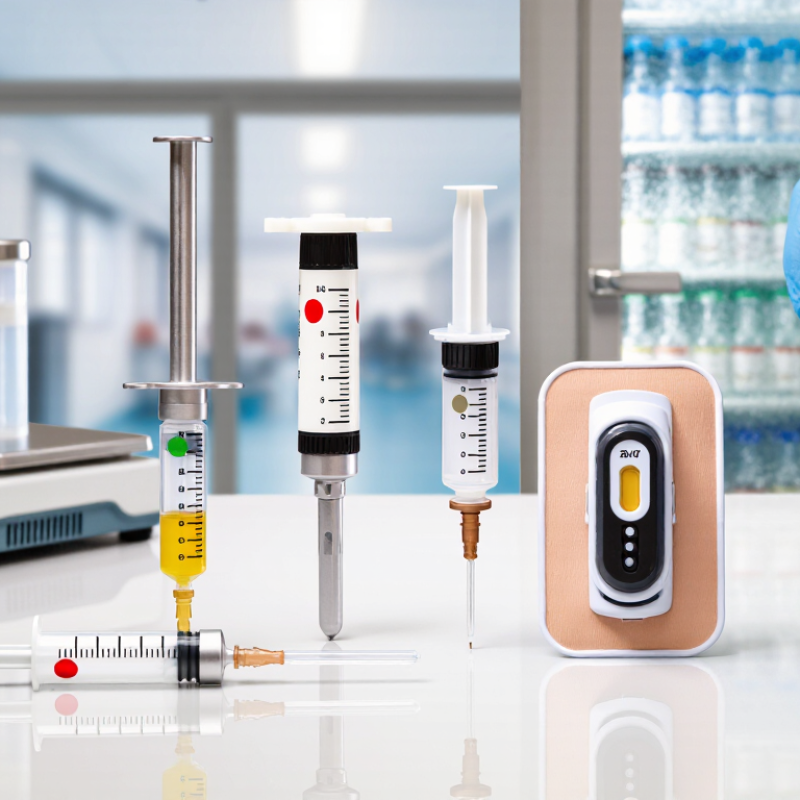
Auto syringes are designed to prevent unintended reuse after one injection. Their internal mechanism usually locks the plunger, breaks the device, or blocks fluid delivery. This action happens automatically, without relying on staff memory. Common types include fixed-dose auto-disable syringes, autodisable syringes with reuse prevention, and safety-engineered models with needle protection. Some models combine these features with prefilled medication systems. The mechanism is simple, but not foolproof.
The World Health Organization reported that around 16 billion injections occur worldwide each year. Its injection-safety guidance highlights auto-disable devices as an important option for immunization programs. WHO also estimated that unsafe injections caused millions of hepatitis B and C infections in 2010. These figures show why device selection involves more than price. Buyers should examine dose accuracy, dead space, activation force, needle protection, and disposal requirements. A syringe that works well in a clinic may perform poorly in a mobile setting. That gap deserves review.
Tips: Check compatibility with the intended vaccine or medicine. Request independent testing data, not only supplier claims. Inspect the lock mechanism using gloved hands and realistic storage conditions. The UNICEF Supply Division product specifications can support procurement comparisons. Also confirm packaging integrity, sterility documentation, and training needs. Small design details matter.
In 2026, prefilled autoinjectors are likely to lead the global auto syringe market. Their advantage is practical: medication arrives measured, sealed, and ready for use. This reduces preparation steps in homes, clinics, and travel settings. Grand View Research estimated the global autoinjector market at about USD 2.9 billion in 2023, with strong growth expected through 2030. The report links expansion to self-administration and rising biologic therapies. User confidence still matters.
Spring-loaded disposable syringes should remain important for cost-sensitive healthcare systems. They are simple, familiar, and easier to scale during large treatment programs. Reusable electronic injectors may gain ground in chronic care, especially when dose tracking and connectivity are valuable. However, higher purchase costs and maintenance can slow adoption. MarketsandMarkets has identified growing demand for connected drug-delivery systems, while IQVIA reports continued expansion in specialty and biologic medicines. These trends support smarter devices, but they do not guarantee broad acceptance. Local reimbursement, storage conditions, needle comfort, and training can change the result. I would not treat one forecast as universal. Reports use different definitions, and “auto syringe” can include several device categories. Global buyers should compare failure rates, packaging durability, temperature performance, and human-factors testing before selecting a leading type. In real procurement, the best device may be less sophisticated. Reliability wins quietly.
| Auto-Syringe Type | Typical Drug Container | Typical Fill Volume | Common Injection Route | Typical Needle Range | Primary Use Cases | Main Advantages | Key Limitations | 2026 Global Adoption Outlook | Buyer Evaluation Priority |
|---|---|---|---|---|---|---|---|---|---|
| Single-Use Prefilled Autoinjector | Pre-filled glass or polymer syringe integrated into a disposable device | Approximately 0.5–2.25 mL | Subcutaneous; selected models support intramuscular delivery | Commonly 27–29G; configuration depends on drug viscosity and injection depth | Chronic therapies, biologics, allergy rescue medicines and home self-injection | Simple operation, dose protection, reduced preparation steps and strong support for patient self-administration | Single-use waste, higher packaging cost and compatibility limits for large-volume or highly viscous formulations | Very High | Human factors, needle safety, dose accuracy, container compatibility and global regulatory requirements |
| Syringe-Based Disposable Autoinjector | Replaceable or inserted prefilled syringe housed inside a disposable drive system | Approximately 0.5–3.0 mL | Primarily subcutaneous | Usually 27–30G, with length selected for the intended injection site | Combination products, clinical development programs and products requiring flexible syringe sourcing | Supports multiple syringe formats, simplifies device customization and can reduce development risk | More assembly steps, potential variability between syringe suppliers and additional device validation work | High | Syringe tolerances, end-of-dose behavior, assembly process, break-loose force and supply continuity |
| Reusable Autoinjector with Replaceable Cartridge | Replaceable prefilled or user-loaded cartridge, used with a reusable drive unit | Typically 0.5–3.0 mL per dose | Subcutaneous; some systems are designed for intramuscular use | Commonly 27–31G, depending on formulation and injection requirements | Long-term therapies requiring repeated dosing and lower device waste | Lower device waste over the treatment period, potentially lower long-term ownership cost and familiar operation | Requires cartridge replacement, cleaning or maintenance instructions, and reliable dose tracking | Medium–High | Durability, reset reliability, cartridge availability, dose-counter performance and cleaning requirements |
| Wearable On-Body Injector | Flexible reservoir, cartridge or prefilled container attached to the skin | Approximately 3–10 mL; larger volumes are possible in selected systems | Subcutaneous | Short cannula or hidden needle; gauge and insertion depth vary by design | Large-volume biologics, extended delivery and medicines that are difficult to inject by conventional autoinjector | Enables hands-free delivery, supports larger volumes and may reduce injection frequency or administration burden | Higher system complexity, skin adhesion challenges, activation errors and more demanding transport validation | High in Large-Volume Segments | Adhesion, reservoir accuracy, wear time, occlusion detection, patient comfort and electronic reliability |
| Dual-Chamber Autoinjector | Two separated chambers that mix immediately before administration | Commonly 0.5–2.0 mL after reconstitution | Subcutaneous or intramuscular, depending on the drug product | Often 25–30G, selected according to viscosity and route | Lyophilized biologics, unstable liquid formulations and products requiring on-device reconstitution | Improves storage stability for certain formulations and eliminates separate manual reconstitution steps | More complex sealing, mixing and delivery validation; greater sensitivity to orientation and activation design | Medium–High | Mixing completeness, storage stability, activation force, residual volume and container closure integrity |
| Electronic Smart Autoinjector | Prefilled syringe or cartridge combined with sensors, electronics and a reusable or disposable housing | Approximately 0.5–3.0 mL | Primarily subcutaneous | Typically 27–30G, depending on the drug and injection protocol | Adherence-sensitive treatments, connected-care programs and therapy monitoring | Can provide step-by-step guidance, injection logging, reminders and feedback on administration events | Higher cost, battery or connectivity requirements, cybersecurity considerations and additional usability testing | Medium–High | Connectivity, data privacy, battery life, software validation, interoperability and patient usability |
| Spring-Driven Safety Syringe | Standard prefilled or manually filled syringe with automatic needle retraction or shielding | Approximately 0.5–5.0 mL | Subcutaneous, intramuscular or other approved routes | Commonly 21–30G, selected by route, dose and viscosity | Healthcare facilities, vaccination programs and settings requiring needlestick protection | Simple safety mechanism, broad syringe-size availability and reduced occupational exposure risk | May require trained administration, generally offers less assistance for self-injection and can have higher activation forces | Stable, Specialized | Needle-shield reliability, accidental activation resistance, compatibility with standard clinical technique and disposal |
Auto syringes differ mainly by dose, activation method, and delivery setting.
Fixed-dose devices suit medicines requiring consistent volumes, often 0.5 mL or 1 mL. Variable-dose systems offer flexibility, but they require stronger user training and clearer dose markings.
According to Grand View Research’s 2024 Autoinjectors Market Report, the global market was valued at approximately USD 2.3 billion in 2023. This growth reflects demand for simpler self-administration and safer clinical workflows.
However, market growth does not mean every design fits every patient.
Spring-powered systems can deliver quickly, while electronic systems may provide feedback, timing, or connectivity. Needle shielding, inspection windows, grip texture, and activation force matter during real use.
ISO 11608 guidance supports evaluation of needle-based injection systems, including dose accuracy and functional performance. Buyers should also examine viscosity limits, storage temperature, shelf life, and compatibility with the primary container.
A compact device may travel well, yet feel difficult for users with weak hand strength. That trade-off deserves honest testing.
Tips: Request samples across dose ranges. Test them with gloves and limited dexterity. Compare activation force, injection time, and leftover volume. Review human-factors data, not only laboratory results.
A useful question is simple: Can a first-time user operate it correctly?
Sometimes, the answer is no.
Sources: Grand View Research, Autoinjectors Market Report, 2024; ISO 11608 series.
For global buyers, “auto syringe” usually means an auto-disable syringe that blocks reuse after one injection. This matters in vaccination and mass-treatment programs. The World Health Organization reports that approximately 16 billion injections occur worldwide each year, with most used for therapeutic care. A failed reuse barrier can therefore create serious safety risks.
Buyers should check whether the syringe meets ISO 7886-1 requirements for manually operated, single-use syringes. For prefilled systems, ISO 11040-4 is more relevant. Needle-stick prevention also deserves close review. The U.S. Centers for Disease Control and Prevention recommends evaluating safety features, activation steps, and user training before procurement. A complicated mechanism may look advanced, yet fail during a rushed injection.
Compatibility is less visible, but equally important. Confirm the barrel volume, luer connection, needle gauge, medication viscosity, and storage temperature. Some prefilled syringes require precise material compatibility testing because silicone oil, elastomers, or adhesives may affect the drug. Regulatory files should include biocompatibility, sterility, extractables, and packaging data. WHO prequalification documents can support purchasing decisions, but local registration remains necessary. That detail is often missed.
A practical trial should include cold-chain handling, gloved use, disposal containers, and repeated operator observation. No checklist is perfect. A syringe can pass laboratory testing and still confuse users in a crowded clinic. Document those failures before signing a large supply contract.
2026 Top Auto Syringe Types for Global Buyers?
Global buyers should compare auto syringes by use case, not appearance alone. Common options include single-use, prefilled, reusable, safety, and dual-chamber designs. Each type changes filling needs, storage requirements, handling steps, and total cost. A device that looks economical may require specialized packaging or training.
Supplier comparison should begin with documented manufacturing experience. Ask for material specifications, dimensional tolerances, batch records, and stability data. Review quality certifications, inspection procedures, complaint handling, and production capacity. Request samples from several batches, not one carefully selected unit. Test plunger movement, dose accuracy, needle protection, labeling, and package integrity under realistic conditions. Small details matter.
Costs need a wider calculation. Include tooling, minimum order quantities, freight, customs, testing, rejected units, and technical support. Clarify whether prices cover sterile processing and export documents. A low quotation can hide long lead times. That gap matters. Suppliers should also explain how they control changes in resin, components, and assembly sites. Ask difficult questions early. In my experience, buyers sometimes overvalue unit price and undervalue consistent performance. I would also challenge my own checklist: laboratory results may not reflect hurried warehouse handling or different climates. A practical trial, clear acceptance criteria, and traceable records provide stronger evidence than attractive sales claims.
How can global buyers compare syringe formats, procurement cost, and quality requirements?
The chart shows representative upper working volumes commonly used in laboratory autosampler syringe formats. Actual capacity, pressure rating, needle geometry, and pricing vary by application and supplier specification.
| Syringe type | Typical application | Relative cost tier | Key quality checks |
|---|---|---|---|
| Fixed-needle syringe | Routine liquid autosampling and high repeatability | Low to medium | Needle alignment, plunger smoothness, leakage, dimensional consistency |
| Removable-needle syringe | Flexible laboratory workflows requiring needle replacement | Medium | Connection seal, dead volume, needle interchangeability, leak testing |
| Gas-tight syringe | Volatile samples, gases, and moisture-sensitive compounds | Medium to high | Barrel sealing, gas tightness, chemical compatibility, plunger fit |
| High-pressure syringe | Pressurized sampling and specialized analytical systems | High | Pressure rating, seal integrity, material strength, safety documentation |
| Large-volume syringe | Preparative sampling and applications requiring higher sample volume | Medium to high | Volumetric accuracy, structural rigidity, stroke repeatability, cleaning method |
For global supplier comparisons, buyers should evaluate total cost rather than unit price alone. Important factors include compatibility with the instrument, minimum order quantity, replacement-part availability, calibration records, batch-to-batch consistency, packaging, export documentation, and lead time. Gas-tight and high-pressure formats normally require stricter validation and therefore carry higher procurement costs.
Fixed-dose devices deliver one preset volume, commonly 0.5 mL or 1 mL. They support consistent treatment. Variable-dose models allow adjustments but need clear markings and better training. More flexibility can create more mistakes.
Spring-powered systems may inject quickly after activation. Electronic systems can provide timing, alerts, or usage feedback. However, electronic features may increase cost and maintenance needs. Simple can be safer.
Check the grip texture, activation force, needle shield, and viewing window. Test the device with gloves and weak hand strength. A compact shape may travel easily but feel awkward during injection.
Request samples across the intended dose range. Measure injection time, activation force, and leftover liquid. Watch first-time users operate the device. Laboratory results alone are not enough.
Confirm barrel volume, needle size, connector type, and medication viscosity. Review storage temperature and shelf life. Check materials that contact the medicine. Small material changes can affect performance.
Look for single-use controls and reliable needle shielding. Review activation steps and disposal requirements. A complicated mechanism may fail during a crowded clinic session. That risk is easy to underestimate.
Test cold-chain handling, gloved operation, transport, and disposal. Observe several operators using the device repeatedly. Record confusion, delays, and incomplete injections. No checklist catches everything.
Ask whether a first-time user can operate the device correctly. Use short instructions and realistic practice sessions. Repeat the test after a busy shift. The answer may still be no.
Auto Syringe devices are designed to deliver a premeasured dose with greater consistency, convenience, and control than conventional manual syringes. In 2026, global buyers are expected to compare single-use, reusable, fixed-dose, variable-dose, spring-powered, and electronically assisted designs according to treatment setting and user needs. Their selection will depend on dose accuracy, injection speed, portability, ease of operation, and suitability for professional or self-administration.
When evaluating an Auto Syringe, buyers should review safety features such as needle shielding, lockout mechanisms, tamper resistance, and clear dose confirmation. Regulatory documentation, biocompatibility, sterility assurance, shelf life, and compatibility with the intended medication or container are also essential. Supplier comparisons should consider total cost, manufacturing consistency, quality-control systems, customization capacity, delivery reliability, and after-sales support. A balanced assessment of performance, compliance, supply stability, and long-term value can help international purchasers choose dependable solutions for 2026 and beyond.

Weinuoer